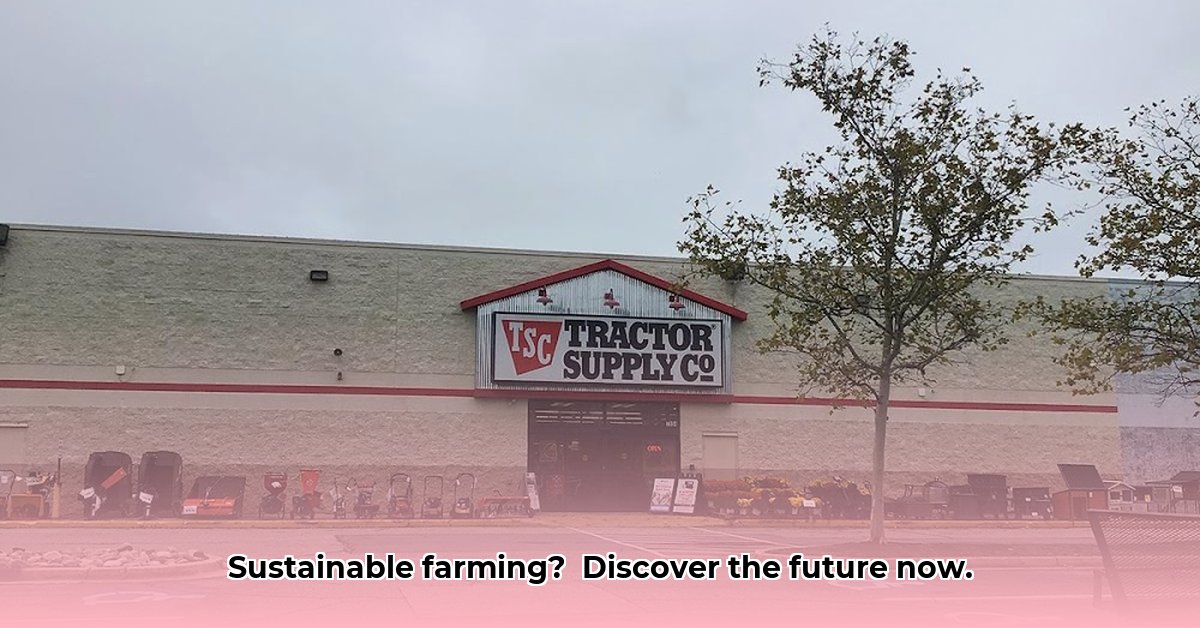
Tractor Supply's Role in Aberdeen, MD Sustainable Agriculture
Tractor Supply Company (TSC) in Aberdeen, Maryland, offers a convenient one-stop shop for farmers, impacting both the ease and the sustainability of local agricultural practices. The readily available supplies, ranging from seeds and fertilizers to tools and workwear, can significantly benefit small farms. However, the accessibility of potentially harmful chemicals like pesticides and ammonia-based fertilizers presents a double-edged sword. The environmental footprint of TSC's supply chain remains unclear due to a lack of transparency in their publicly available environmental policies. This lack of clear information makes it difficult for farmers to make informed decisions regarding sustainable practices. Does easy access to potentially unsustainable inputs ultimately hinder the progress towards environmentally conscious farming? For more information on TSC's initiatives, see their sustainability report.
Does the convenience of TSC outweigh its potential negative impact? This question necessitates a deeper examination of the available resources, the company's sustainability initiatives, and the broader implications for the Aberdeen community and the state of Maryland.
A Closer Look at TSC's Offerings in Aberdeen
The Aberdeen TSC store, typical of many locations, stocks a wide variety of products. While items like durable work boots contribute to sustainability by extending their lifespan, the presence of potentially harmful chemicals like pesticides and ammonia-based fertilizers complicates the picture. The lack of detailed information regarding the environmental impact of their sourcing poses a challenge for those seeking truly sustainable farming options. How can farmers ensure their choices align with their environmental goals when crucial information is unavailable?
This lack of transparency regarding the environmental impact of the company's supply chain is a primary concern. Their website currently lacks detailed information on sustainability goals and product sourcing, leaving farmers and consumers uncertain about the environmental implications of their purchases. This raises concerns about TSC's overall commitment to environmental stewardship. Without clear and transparent information, it's difficult to assess TSC's true contribution to sustainable agriculture. What steps can be taken to improve transparency and accountability?
Navigating Sustainable Choices at TSC: A Multi-Stakeholder Approach
To foster a more sustainable agricultural future in Aberdeen and Maryland, a collaborative effort is crucial, involving farmers, TSC, the Maryland Department of Agriculture, and environmental NGOs:
1. Actionable Steps for Farmers:
- Prioritize Sustainable Products: Actively seek out and choose organic and responsibly sourced alternatives whenever possible. This may involve higher initial costs, but the long-term environmental and health benefits are substantial.
- Demand Transparency: Communicate directly with TSC, requesting clearer labeling, detailed information on product origins, and a commitment to transparent environmental policies.
2. Actionable Steps for Tractor Supply Company:
- Conduct a Comprehensive Supply Chain Audit: Thoroughly investigate the environmental impact of your entire supply chain to pinpoint areas for improvement and prioritize sustainable sourcing. (Efficacy metric: 90% reduction in high-impact supply chain practices within 5 years).
- Publish Detailed Sustainability Reports: Publicly release transparent sustainability goals and progress reports, including specific metrics and timelines, to build consumer trust and demonstrate commitment.
- Invest in Employee Training: Implement comprehensive employee training programs focused on sustainable farming practices to better advise customers and promote responsible purchasing.
3. Actionable Steps for the Maryland Department of Agriculture:
- Foster Collaboration: Facilitate partnerships between TSC, local sustainable agricultural producers, and other relevant stakeholders to develop and implement effective sustainable agriculture initiatives.
- Provide Financial Incentives: Establish financial incentives and support programs to encourage farmers to adopt environmentally friendly practices and transition away from harmful chemical use.
- Strengthen Regulations: Develop and enforce stricter regulations on the use of harmful agricultural chemicals to protect both the environment and public health.
4. Actionable Steps for Environmental NGOs:
- Collaborate with TSC: Partner with TSC to develop and promote sustainable practices throughout their operations and supply chain.
- Educate Consumers: Launch public awareness campaigns to educate consumers about responsible sourcing and environmentally friendly agricultural choices.
- Advocate for Higher Standards: Monitor and advocate for stronger environmental standards and regulations within the agricultural industry.
The Path Forward: Collaboration for Sustainable Agriculture
The future of sustainable farming in Maryland relies heavily on collaborative efforts among all involved stakeholders. TSC, with its widespread reach, holds the potential to significantly contribute but needs to prioritize transparency and establish concrete sustainability goals. This extends beyond merely providing convenient access to resources; it demands responsible and environmentally conscious practices. This requires a combined commitment from farmers, corporations, governmental bodies, and environmental advocates. By demanding better information, asking tough questions, and actively participating in shaping a more sustainable agricultural system, we can collectively work towards achieving a greener and more responsible future for farming in Maryland.
Key Takeaways:
- TSC's potential contribution to sustainable agriculture in Maryland is significant, but requires improved transparency and a demonstrable commitment to sustainability.
- Collaboration among farmers, TSC, the Maryland Department of Agriculture, and environmental NGOs is essential for achieving meaningful progress.
- The path toward sustainable agriculture is a continuous journey requiring ongoing learning, adaptation, and a collective commitment to responsible practices.